
Lavorazione Campane

Gennaio 13, 2018 Written by

MARINELLI

Le fasi di lavorazione che portano alla nascita della campana richiedono un lavoro attento e paziente ma principalmente esperienza e passione.

Oggi nella fonderia Marinelli si usano le stesse tecniche ed i materiali dei maestri del Medioevo e del Rinascimento. La tecnologia non ha accelerato il ciclo di lavorazione che può variare da due a molti mesi. Nel 1700 la campana aveva finalmente assunto una forma ben definita, molto simile a quella odierna, tuttavia persisteva spesso la sproporzione fra diametro ed altezza percui continuava a conservare un aspetto affusolato. In seguito fu definita una scala campanaria che indicava proporzioni perfette tra spessore, peso, circonferenza ed altezza, rapportati al timbro sonoro richiesto. La campana può essere considerata un tronco di cono inserito in un cubo; il suo profilo viene disegnato dal compasso non essendovi linee diritte, come riporta anche Diderot nell’ ” Encyclopedie” e questo determina la buona riuscita della campana e del suono.

Preparazione del Modello
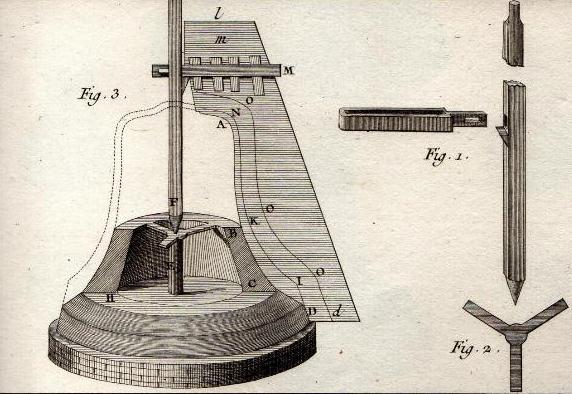
Sagoma in legno per campanaSi parte dalla preparazione di una sagoma in legno di noce che corrisponde al profilo della campana. Con essa si disegna una struttura cava di mattoni corrispondente all’interno della campana, L’ANIMA, sulla quale viene distribuito un primo strato di argilla. Sull’anima si sovrappongono alcuni strati di speciali argille fino ad ottenere la FALSA CAMPANA che avrà esattamente lo spessore voluto per la campana di bronzo. Su questa superficie, perfettamente levigata, si applicano fregi ed iscrizioni in cera che dedicano e decorano la campana.

L’ultima fase di formatura consiste nel preparare il MANTELLO ottenuto dalla sovrapposizione di strati di argilla. A modello ultimato viene sollevato il mantello per scoprire la falsa campana che verrà distrutta, il mantello sarà riposizionato sull’anima cosicchè all’interno del modello si sarà creata l’intercapedine nella quale verrà colato il bronzo.

A questo punto Il Modello è pronto per essere collocato nel fosso di colata, ai piedi del forno, per essere interrato. Il modello della campana è bloccato saldamente nella fossa di colata al fine di non subire spostamenti durante la fusione. Il bronzo (78 parti di rame e 22 di stagno) fonde in un grande forno a riverbero, alimentato a legna, alla temperatura di circa 1150°.

Read 25116783 times Last modified on Sabato, 13 Gennaio 2018 16:36
More in this category: « Lavorazione Campane

2305973 comments

  • Comment Link Annamaria Cliffton Agosto 08, 2026 posted by Annamaria Cliffton

    I have read a few just right stuff here. Definitely price bookmarking for revisiting. I surprise how much attempt you put to create this sort of fantastic informative website.

  • Comment Link CarlosSeich Agosto 08, 2026 posted by CarlosSeich

    такой [url=https://miningclub.live/]antminer s19[/url]

  • Comment Link Roger Stevenson Agosto 08, 2026 posted by Roger Stevenson

    Thanks for pointing out timers and photocells. I built-in a clever time table and tuned brightness zones following a walkthrough on landscape lighting near me .

  • Comment Link Sherie Valer Agosto 08, 2026 posted by Sherie Valer

    My family members all the time say that I am killing my time here at web, except I know I am getting knowledge all the time by reading such fastidious posts.

  • Comment Link Luke Whitebear Agosto 08, 2026 posted by Luke Whitebear

    Good post. I learn something new and challenging on websites I stumbleupon on a daily basis. It's always useful to read through content from other writers and use a little something from their sites.

  • Comment Link Lita Goans Agosto 08, 2026 posted by Lita Goans

    Wow that was odd. I just wrote an very long comment but after I clicked submit my comment didn't appear. Grrrr... well I'm not writing all that over again. Regardless, just wanted to say great blog!

  • Comment Link Elisha Deigado Agosto 08, 2026 posted by Elisha Deigado

    Hey I know this is off topic but I was wondering if you knew of any widgets I could add to my blog that automatically tweet my newest twitter updates. I've been looking for a plug-in like this for quite some time and was hoping maybe you would have some experience with something like this. Please let me know if you run into anything. I truly enjoy reading your blog and I look forward to your new updates.

  • Comment Link Hulda Ripplinger Agosto 08, 2026 posted by Hulda Ripplinger

    Aw, this was a very good post. Taking the time and actual effort to create a top notch article… but what can I say… I procrastinate a lot and don't seem to get anything done.

  • Comment Link Sidney Morway Agosto 08, 2026 posted by Sidney Morway

    I like the valuable info you provide to your articles. I will bookmark your weblog and take a look at again right here frequently. I'm slightly sure I'll be informed many new stuff right right here! Best of luck for the next!

  • Comment Link Long Beese Agosto 08, 2026 posted by Long Beese

    Aw, this was an incredibly nice post. Finding the time and actual effort to create a top notch article… but what can I say… I hesitate a whole lot and never seem to get nearly anything done.

Leave a comment

Make sure you enter all the required information, indicated by an asterisk (*). HTML code is not allowed.